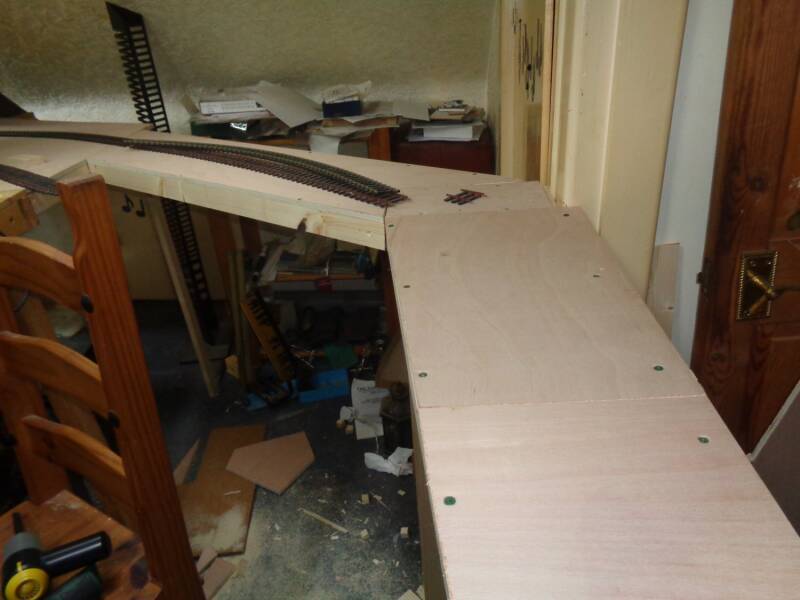
The lift-out section for the door. It was so tight here to keep to 48" minimum radius I took the door off.
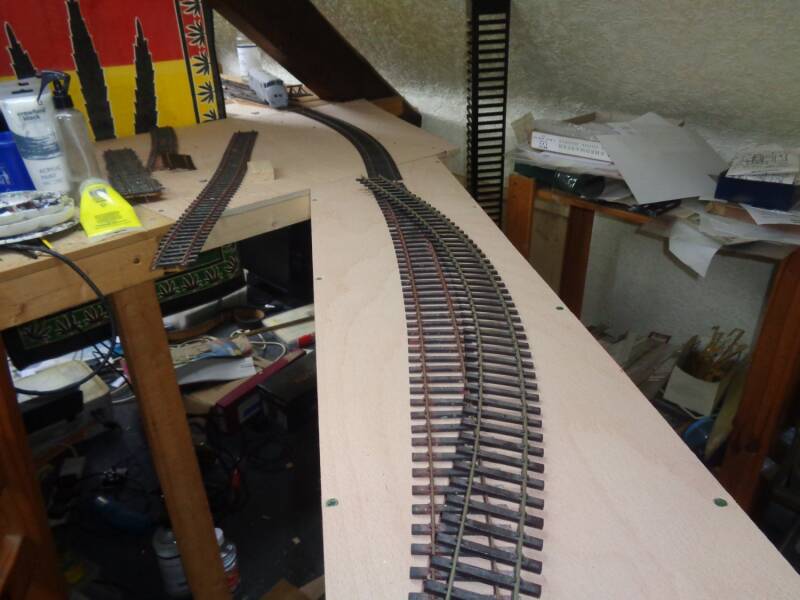
Juggling track. As it happened I had exactly the right number of yards.

And going round the other way.
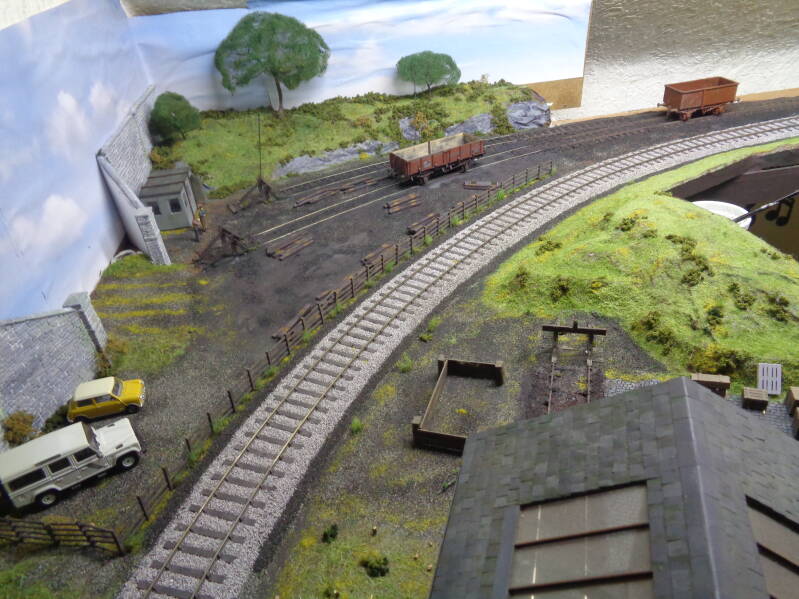
And Weavers sidings.
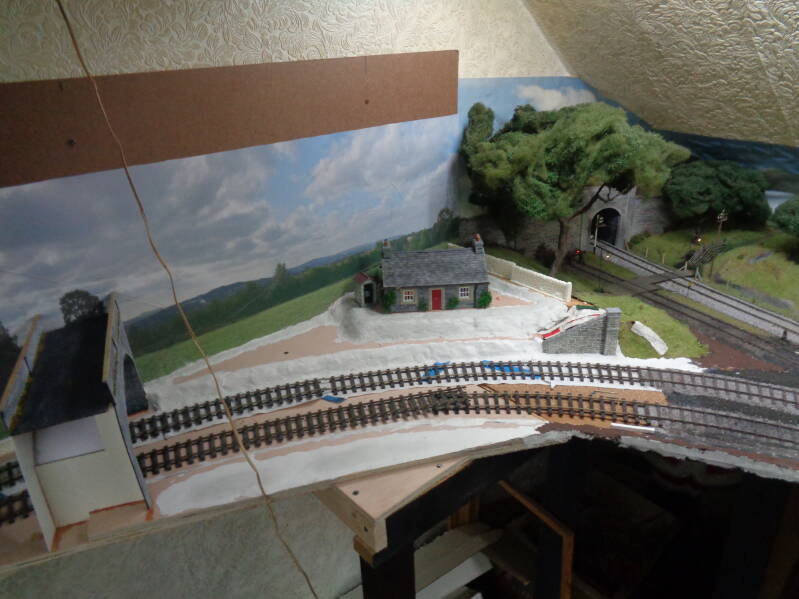
The curves again. The inner one actually drops to 46" just before the bridge, but hasn't caused any problems.
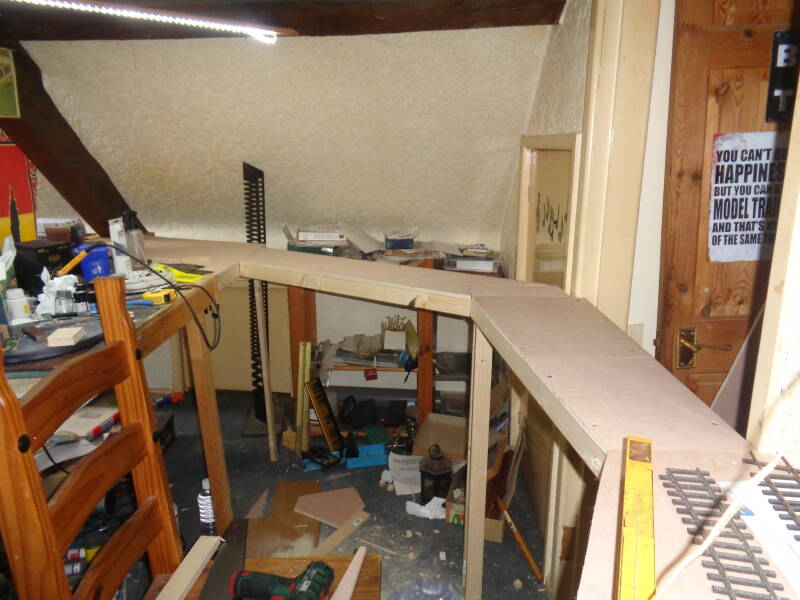
The second section away form the camera needs to be lift-out too, to get to the water tank. The track will get cut when it has to be.
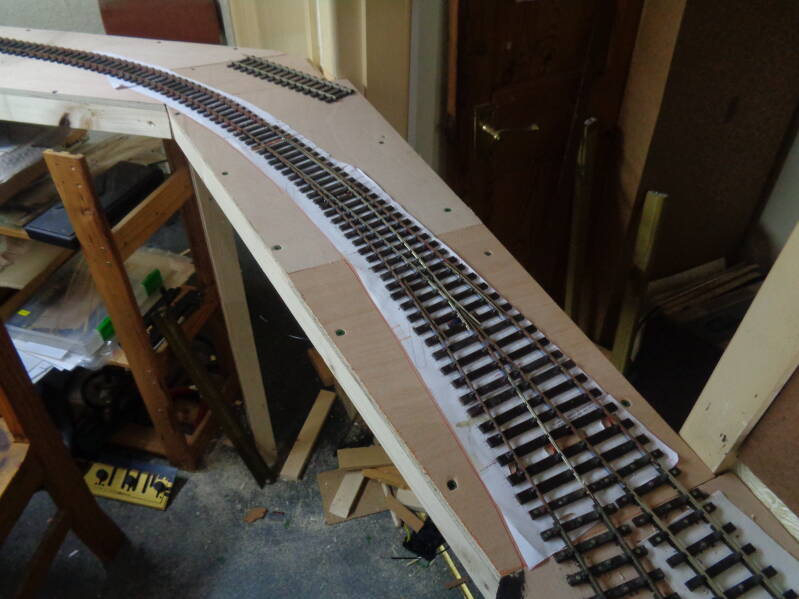
Unfortunately the lift-out section has to have the points on it. The length meant using an enormous number of point timbers.
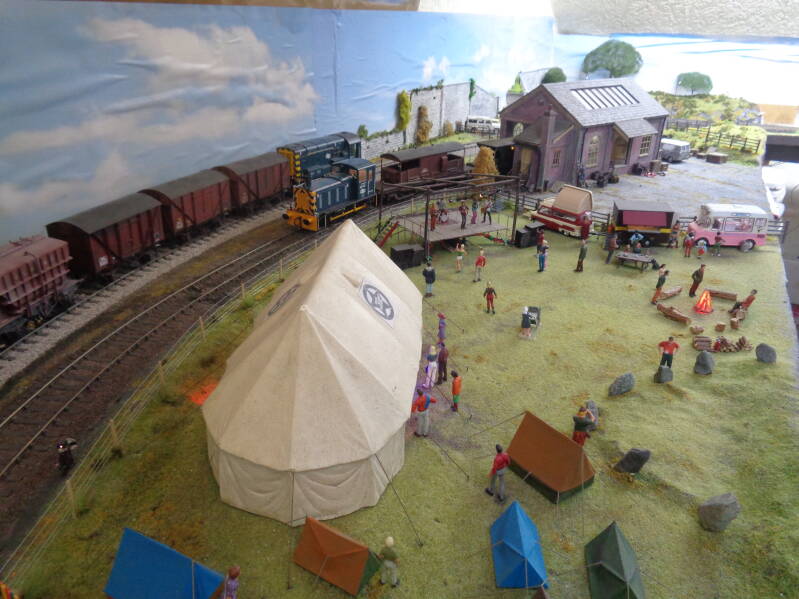
The festival and goods yard now on the old studio site.
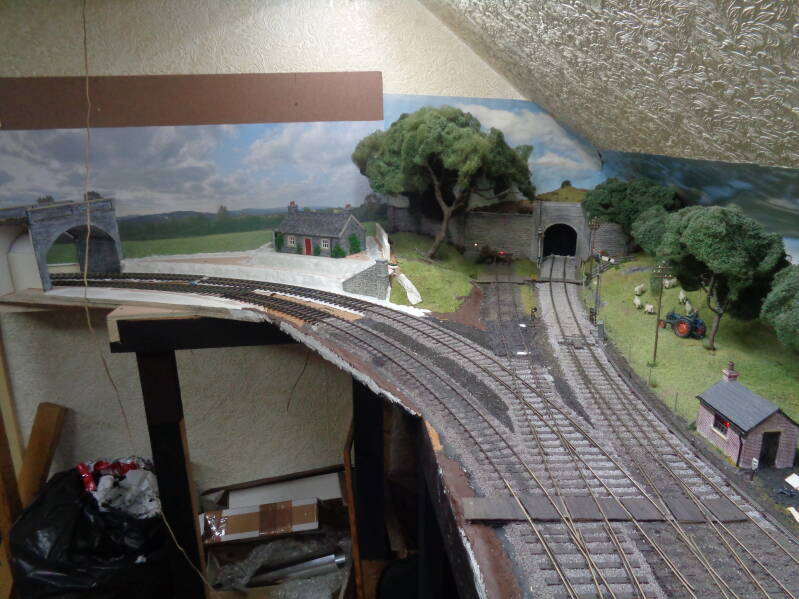
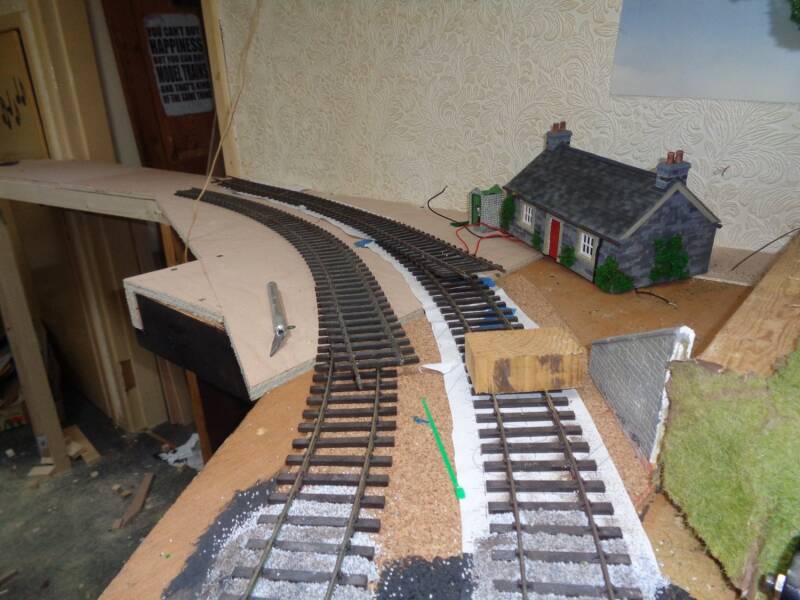
The new curves going of to the left - 48" radius.
No.1 step son has a habit of dropping round and usually come up to Loftshire. "It's a pity you can go round in a circle" he observed. I thought so too, but I'd become fixated that 5ft radius was the minimum curve on O gauge. Not quite sure why exactly. Any how, I did some reading up and it seemed that 48" was more like the minimum, at least that was the minimum for the Western. So, out with the tape measure and AnyRail - but, without basically re-building the whole layout and losing all it's character it was a no-go. Then I remembered Templot. Back in the 2008 burst of enthusiasm I'd built a set of point, supposedly step one towards a layout that never happened.
One of the things you can do with Templot (and there are many!) is import photos. So I took photos from directly above (at least as directly as the sloping roof allows, and, using new piece of track in Templot as reference, scaled them - ariel photos of the place where new track would be needed. Then, with minimum radius set to 48", I started overlaying new track for a circular layout over the old and being able to see where it would tie into the old. Quite a lot of points to make, not a favourite activity, but it wokked. Just. Very just. And so, two years later, the extension was complete.
I was happy to discover 48" curves aren't the problem I though they'd be. The Western can go round them, but not pull a train due to massive, like over the other rail, buffer lock. Ditto the TEA's, but both of these buffer locked on Peco points, so no real difference, they would be restricted anyway. All the rest of the rolling stock, including the various bogey wagons, all work just fine on the tight bends, both being pulled and propelled - no buffer lock.
The wiring for the lift-out section is arranged to that I can't drive an engine off the cliff. Each side there are dead-sections about 2ft long that are powered from the lift-out section itself, which gets it's power from miles away through the DIN plugs.
Create Your Own Website With Webador